
The way we design and maintain our outdoor spaces has a far greater impact on comfort, safety, and environmental health than most homeowners realize. From the driveway to the patio, the materials we choose and how we treat them directly influence how heat is absorbed, retained, and radiated back into the surrounding environment. As urban heat concerns grow and outdoor living becomes more central to modern home life, understanding the relationship between surface coatings, pavement treatments, and backyard design has never been more relevant.
The Science Behind Surface Heat Absorption
Not all outdoor surfaces behave the same way under the sun. Dark, untreated asphalt, for example, is notorious for absorbing solar radiation and converting it into heat — a phenomenon that contributes significantly to what climate scientists call the urban heat island effect. Concrete, gravel, and various paving materials each have distinct thermal properties, but asphalt remains one of the most common and most heat-intensive surfaces in residential and commercial settings alike.
Research has consistently shown that urban areas with high concentrations of paved surfaces experience temperatures several degrees higher than surrounding rural areas. This isn’t just a matter of discomfort — elevated surface temperatures affect air quality, increase energy consumption in nearby buildings, and can even pose health risks during heat waves. The materials we choose for our driveways, parking areas, and walkways are not passive decisions; they carry real environmental consequences.
Reflectivity and Emissivity: What They Mean for Your Property
Two key concepts help explain why some surfaces stay cooler than others: reflectivity and emissivity. Reflectivity refers to a surface’s ability to bounce solar energy back rather than absorb it. Emissivity describes how efficiently a surface releases absorbed heat. Untreated, aged asphalt scores poorly on both measures — it darkens over time, becoming more absorptive, and retains heat well into the evening hours. Properly applied coatings can dramatically alter these properties, making treated surfaces significantly cooler and more energy-efficient over time.
Coatings as a Practical and Environmental Solution
One of the most effective and accessible interventions for homeowners and property managers is the application of high-quality asphalt coatings. These products serve multiple purposes simultaneously: they protect the underlying pavement from UV degradation, water infiltration, and cracking, while also improving the surface’s thermal performance. A well-coated driveway or parking area is not only more durable — it can reflect more light and reduce the heat load on the surrounding environment.
Working with a trusted professional makes all the difference in achieving these results. Asphalt Coatings Company brings specialized expertise to residential and commercial pavement projects, offering coating solutions that extend the life of asphalt surfaces while improving their performance under intense sun exposure. Their work addresses both the structural and thermal challenges that property owners face when managing large paved areas in warm climates.
The Long-Term Value of Preventive Pavement Care
Many property owners delay pavement maintenance until cracks and deterioration become unavoidable. This reactive approach is almost always more expensive than preventive care. Asphalt that is regularly sealed and coated resists the oxidation and moisture damage that lead to costly repairs or full replacement. Beyond the financial argument, well-maintained surfaces simply perform better — they drain more effectively, hold their color longer, and contribute less to localized heat buildup. Thinking of pavement care as an investment rather than an expense changes the entire calculus of property management.
Connecting Outdoor Surface Choices to Backyard Comfort
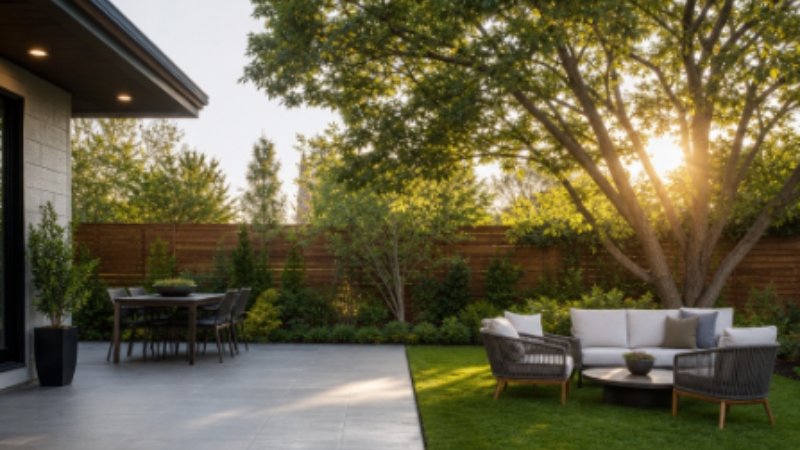
The heat generated by poorly managed outdoor surfaces doesn’t stay confined to driveways and parking lots. It radiates outward, warming adjacent spaces including patios, garden areas, and outdoor entertaining zones. Homeowners who invest in fire pit gatherings, evening cookouts, and outdoor hosting often overlook how much the surrounding surface temperatures influence the comfort of those experiences. A driveway or walkway that radiates stored heat well after sunset can make an otherwise pleasant evening feel oppressively warm.
This is why thoughtful outdoor design considers all surfaces holistically. Understanding why timing matters for backyard fire pit gatherings and outdoor hosting goes hand in hand with understanding how your surrounding surfaces behave throughout the day. Scheduling outdoor events during cooler parts of the evening is wise, but pairing that timing with surfaces that don’t retain and radiate excess heat makes the experience genuinely more comfortable for everyone involved.
Designing for Thermal Comfort from the Ground Up
Landscape architects and outdoor living specialists increasingly recommend a layered approach to thermal management. This means combining shade structures, vegetation, water features, and surface material choices to create microclimates that stay cooler than the surrounding urban environment. Treated asphalt, light-colored concrete, permeable pavers, and strategic plantings all contribute to a more thermally balanced outdoor space. No single solution works in isolation, but the cumulative effect of smart choices can be dramatic.
Urban Heat Islands: A Growing Concern for Residential Communities
The urban heat island effect is not just a problem for city planners and climate scientists — it’s a lived reality for millions of suburban and urban homeowners. As detailed in Reuters’ in-depth reporting on urban heat and climate change, densely paved environments can experience temperature spikes that significantly exceed those of less developed areas nearby. These temperature differentials have measurable effects on energy bills, public health outcomes, and overall quality of life.
Individual property decisions, multiplied across thousands of homes in a neighborhood, add up to meaningful change. When homeowners choose reflective coatings, maintain their pavement properly, and incorporate cooling elements into their outdoor design, they contribute to a broader reduction in localized heat stress. This is one of the rare cases where what’s good for the individual property is also genuinely good for the surrounding community.
About Asphalt Coatings Company
Asphalt Coatings Company has built a strong reputation for delivering professional pavement maintenance and coating services that stand up to demanding conditions. Their team works with property owners to assess the current state of asphalt surfaces, recommend appropriate treatment strategies, and apply coatings that deliver lasting protection and improved performance. Whether the project involves a residential driveway, a commercial parking lot, or a large-scale paving application, their approach combines technical knowledge with a commitment to quality results. Clients consistently report improved surface longevity and reduced maintenance costs following their work.
Conclusion: Small Decisions, Large Impact
The choices we make about outdoor surfaces ripple outward in ways that affect comfort, cost, and climate. Treating asphalt with quality coatings, timing outdoor gatherings thoughtfully, and designing spaces with thermal management in mind are not isolated decisions — they are interconnected strategies that together create better outdoor environments. As awareness of urban heat grows and homeowners become more intentional about their property’s environmental footprint, the demand for smart, professional pavement solutions will only increase. Investing in the right materials and the right expertise today pays dividends in comfort, durability, and sustainability for years to come.