
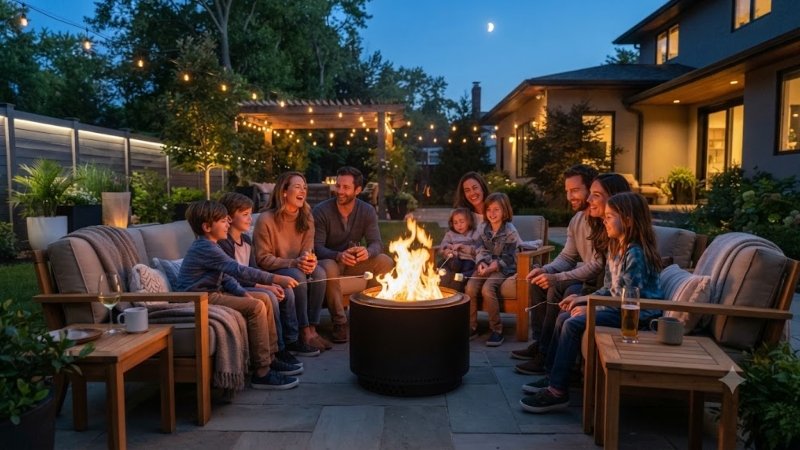
Picture this: you’re sitting by a campfire, but there’s no smoke stinging your eyes. Sounds impossible, right? It’s not. Smokeless fire pits have changed backyard fires forever. Sales of these pits jumped by over 300% in the last five years, according to outdoor living industry reports. Why the surge? People want cozy fires without the smoke, ash, and watery eyes. Traditional fire pits burn wood poorly. They release thick smoke that clings to clothes and hair. Smokeless fire pits solve this problem. They use a clever airflow design. This design burns wood more completely. The result? Less smoke, more heat, and a cleaner burn. In this article, you’ll learn how these pits work, why they’re worth the investment, and which features matter most.
What Makes a Fire Pit “Smokeless”?
No fire pit burns with zero smoke. That’s just physics. But smokeless designs cut smoke way down. They do this through secondary combustion.
Here’s how it works. The pit has a double-wall design. Air enters through holes in the bottom. It travels up between the two walls. Then it shoots out through small holes near the top rim. This preheated air ignites unburned gases and particles. Those particles would normally escape as smoke. Instead, they burn up. You get a hotter, cleaner fire.
This design isn’t new science. Engineers borrowed the concept from rocket stoves. Rocket stoves use similar airflow tricks to burn fuel efficiently. Fire pit makers adapted the idea for backyard use.
Why Homeowners Are Switching
Smoke isn’t just annoying. It’s a real problem for many people. Smoke irritates eyes and throats. It clings to hair and clothing for hours. Neighbors don’t appreciate smoke drifting into their yards either.
Health matters too. Wood smoke contains fine particles. These particles can irritate lungs, especially for people with asthma or allergies. Cutting smoke output makes fire pit nights safer for everyone, including kids and pets.
There’s also the practical side. Less smoke means you can sit closer to the fire. You won’t need to keep shifting your chair to dodge smoke clouds. Clothes won’t smell like a campfire the next day.
Key Features to Look For
Not all smokeless fire pits work the same way. Some brands do it better than others. Here are the features that matter most.
Double-wall construction. This is the core feature. Without it, the pit won’t achieve secondary combustion.
Material quality. Stainless steel resists rust and handles high heat well. Cheaper steel can warp or rust after a season or two.
Size options. Smokeless fire pits come in small tabletop versions and large in-ground models. Pick a size that fits your space and how many guests you host.
Portability. Many smokeless designs are lightweight. You can pack them for camping trips or move them around your patio easily.
Accessories. Look for spark screens, carry bags, and stands. These add convenience and safety.
How to Use a Smokeless Fire Pit Correctly
Getting the most from your smokeless fire pit takes a little know-how. Follow these steps for the best results.
Start with dry, seasoned wood. Wet or green wood creates more smoke, no matter how good the pit design is. Kiln-dried hardwood works best.
Keep the airflow holes clear. Ash and debris can block them over time. Clean your pit after every few uses to keep air moving freely.
Don’t overload the pit with wood. Too much fuel blocks airflow and reduces the smokeless effect. Add wood gradually instead.
Give the fire time to establish. The secondary combustion effect kicks in once the fire gets hot enough. This usually takes ten to fifteen minutes.
Common Myths About Smokeless Fire Pits
Some people think these pits produce zero smoke. That’s not accurate. They produce far less smoke than a standard fire pit, but some smoke still escapes, especially at startup.
Others believe smokeless pits cost too much for the benefit. Prices have dropped a lot as more brands entered the market. You can find solid options at a range of price points now.
There’s also a myth that smokeless pits don’t get as hot. Actually, the opposite is true. Better combustion means more heat from the same amount of wood.
Are They Worth the Investment?
Most buyers say yes. A quality smokeless fire pit lasts for years with proper care. It saves money on wood over time since it burns fuel more efficiently. It also spares your patio furniture and siding from smoke residue.
If you host outdoor gatherings often, the upgrade pays off fast. Guests will notice the difference immediately. No more smoke-filled eyes or ruined sweaters.
Conclusion
Backyard fires don’t have to come with a side of smoke and stinging eyes. A smokeless fire pit gives you the warmth and ambiance of a campfire without the usual downsides. The design is simple but effective, using airflow science to burn wood cleaner and hotter. Whether you’re upgrading your patio or gearing up for camping season, this investment makes outdoor fires more enjoyable for everyone nearby.
FAQs
Do smokeless fire pits really produce no smoke?
No, they don’t eliminate smoke. Smokeless fire pits significantly reduce smoke by improving airflow and combustion, but some smoke still appears, especially when you first light the fire.
Can I use a smokeless fire pit on my wood deck?
Check the manufacturer’s guidelines first. Many smokeless fire pits run hot on the base, so use a heat-resistant mat to protect wood or composite decking.
What type of wood works best in a smokeless fire pit?
Dry, seasoned hardwood works best. Wet or green wood creates more smoke and reduces the efficiency that makes smokeless fire pits so appealing.
Are smokeless fire pits safe for small backyards?
Yes, many smokeless fire pits come in compact sizes designed for small patios and yards. They still require clearance from structures and plants, so check local fire codes.
How much do smokeless fire pits cost?
Prices vary widely. Small tabletop smokeless fire pits start around $100, while larger, premium models can cost several hundred dollars depending on materials and brand.